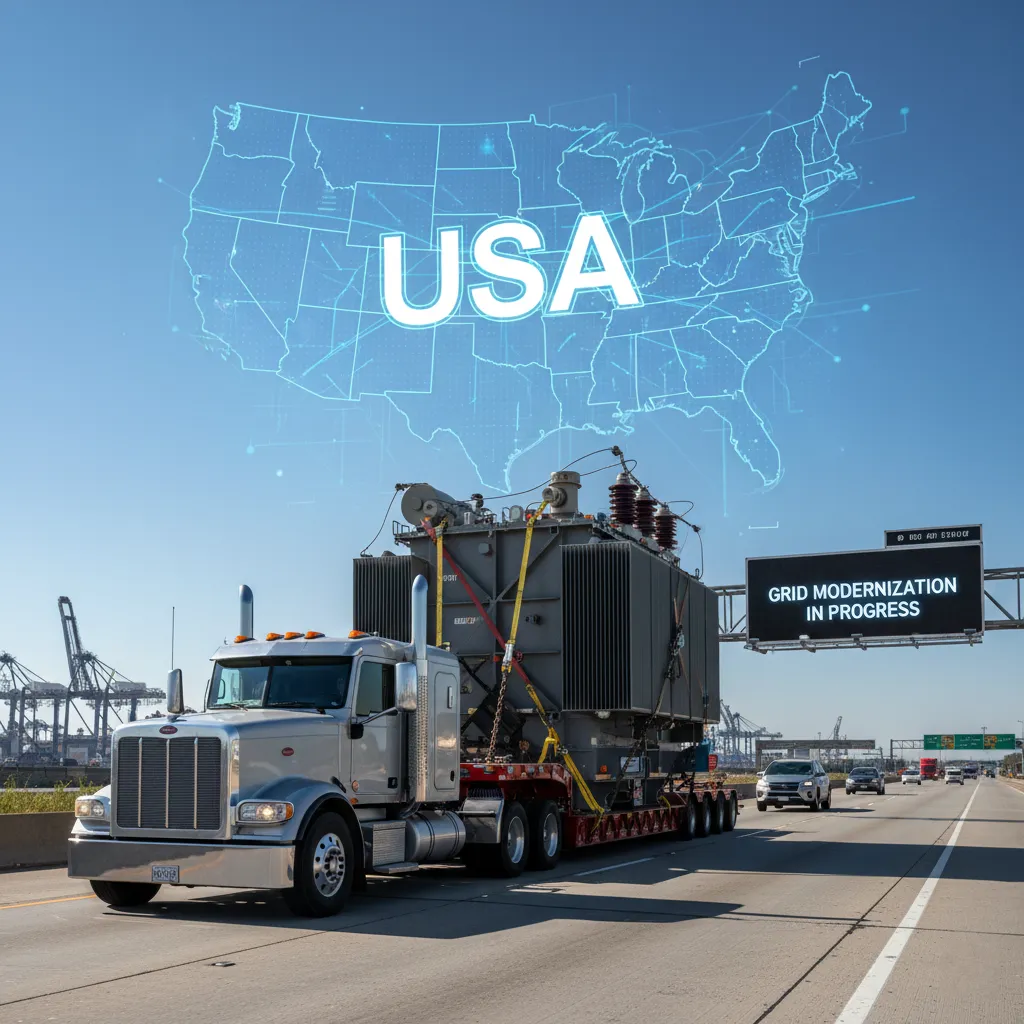
A Perfect Storm for the Trucking Sector
The trucking industry in 2025 faces a severe combination of challenges, characterized by a historic, prolonged freight recession coupled with steeply increasing per-mile operational costs. Now three years into this recession, freight rates and tonnage have remained stagnant. This “perfect storm” is squeezing operating margins and necessitating extensive cost-cutting across fleets.
Amid this adverse operating environment, the American Transportation Research Institute (ATRI) gathered insights from over 4,200 industry stakeholders, including professional truck drivers (29.8%), motor carrier executives (46.7%), and other personnel, to identify the Top 10 Trucking Industry Issues for 2025.
The overall rankings show significant shifts, including the emergence of four new issues in the top ten: English Language Proficiency for Drivers, Diesel Emissions Regulations, Driver Training Standards, and Artificial Intelligence in Trucking.
The Unrelenting Economic Pressure
For the third consecutive year, the Economy has been selected as the number one overall industry concern. The combination of a lingering freight recession and soaring operational costs is leading to increased carrier bankruptcies.
Operational Costs and Market Conditions
Non-fuel operating costs reached $1.779 per mile in 2025, marking the highest level recorded in the 17-year history of ATRI’s operational costs research. These cost increases have outpaced inflation over three years. Simultaneously, average profit margins were documented as below 2 percent for most industry sectors, with the truckload sector experiencing average profit margins of -2.3 percent.
Additionally, new uncertainties have been introduced by rising and often changing tariffs. The industry anticipates a potential 25 percent import tariff on truck-tractors scheduled for November 1, which is poised to significantly escalate motor carriers’ equipment costs. This is particularly concerning as equipment costs have already risen by over 50 percent in the last five years. Recent reports confirm the strain, showing truck orders are down 44 percent year over year.
Proposed Strategies to Address the Economy (in rank order):
- Quantify the impact of increasing trucking operational costs on supply chains and the nation’s economy, including the impact of new tariffs. This is the preferred strategy of 44.6 percent of respondents, recognizing the need to understand how the pressure on trucking affects the broader national economy.
- Research the patterns and causes of the current, prolonged freight recession. Unlike past recessions which typically lasted 1.5 to 2 years, the current three-year downturn continues. 23.2 percent of respondents prefer this strategy to better prepare for future downturns.
- Research why industry supply has been slow to adjust to changes in freight demand. Factors like the illegal use of B-1 visa drivers in cabotage (delivering point-to-point freight in the U.S.), delayed equipment repossession, and factoring services are believed to contribute to the industry’s slow response to decreased freight demand. 21.5 percent of respondents favor quantifying the impact of these supply factors.
Top Industry Issue Rankings, 2015 – 2024 (Historical Context)
This table demonstrates the shifting pressures and long-term concerns facing the trucking industry over a ten-year span. Bold entries indicate the issue’s first year in the Top 10.
| Year | 1 | 2 | 3 | 4 | 5 | 6 | 7 | 8 | 9 | 10 |
|---|---|---|---|---|---|---|---|---|---|---|
| 2025 | Economy | Lawsuit Abuse Reform | Insurance Cost/ Availability | Truck Parking | Driver Compensation | CSA | English Language Proficiency for Drivers | Diesel Emissions Regulations | Driver Training Standards | AI in Trucking |
| 2024 | Economy | Truck Parking | Lawsuit Abuse Reform | Insurance Cost/ Availability | Driver Compensation | Battery Electric Vehicles (previously ZEV) | CSA | Detention/ Delay | Driver Shortage | Driver Distraction |
| 2023 | Economy | Truck Parking | Fuel Prices | Driver Shortage | Driver Compensation | Lawsuit Abuse Reform | Driver Distraction | Driver Retention | Detention/ Delay | Zero-Emission Vehicles (ZEV) |
| 2022 | Fuel Prices | Driver Shortage | Truck Parking | Driver Compensation | Economy | Detention/ Delay | Driver Retention | CSA | Speed Limiters | Lawsuit Abuse Reform |
| 2021 | Driver Shortage | Driver Retention | Driver Compensation | Lawsuit Abuse Reform (previously Tort Reform) | Truck Parking | CSA | Detention/ Delay | Infrastructure/ Congestion/ Funding | Insurance Cost/ Availability | Diesel Technician Shortage |
| 2020 | Driver Shortage | Driver Compensation | Truck Parking | CSA | Insurance Cost/ Availability | Driver Retention | Tort Reform | Economy | Detention/ Delay | Hours-of-Service |
| 2019 | Driver Shortage | Hours-of-Service | Driver Compensation | Detention/ Delay at Customer Facilities | Truck Parking | Driver Retention | ELD Mandate | CSA | Infrastructure/ Congestion/ Funding | Economy |
| 2018 | Driver Shortage | Hours-of-Service | Driver Retention | ELD Mandate | Truck Parking | CSA | Driver Distraction | Infrastructure/ Congestion/ Funding | Driver Health/ Wellness | Economy |
| 2017 | Driver Shortage | ELD Mandate | Hours-of-Service | Truck Parking | Driver Retention | CSA | Cumulative Impacts of Regulation | Driver Distraction | Infrastructure/ Congestion/ Funding | Driver Health/ Wellness |
| 2016 | ELD Mandate | Hours-of-Service | Cumulative Impacts of Regulations | Truck Parking | Economy | CSA | Driver Shortage | Driver Retention | Infrastructure/ Congestion/ Funding | Driver Distraction |
Note on Trends: The Driver Shortage fell out of the overall top 10 for the first time in the 21-year history of the survey in 2025, likely due to the ongoing freight recession. Conversely, issues related to liability (Lawsuit Abuse Reform and Insurance Cost/Availability) have reached their highest overall rankings in the survey’s history.
The Rising Cost of Risk: Litigation and Insurance
The rising cost of risk remains a monumental concern, with Lawsuit Abuse Reform and Insurance Cost/Availability ranking as the second and third overall industry concerns, respectively.
Lawsuit Abuse Reform (Ranked #2)
Lawsuit Abuse Reform has achieved its highest ranking in the 21-year history of the survey. The trucking industry continues to face “nuclear verdicts” exceeding $100 million. Tactics used by the plaintiff bar are expanding, including third-party litigation funding and staged accidents. Federal legislation, such as the Staged Accident Fraud Prevention Act, was introduced in April 2025 to make staging a crash with a commercial motor vehicle a federal crime.
Proposed Strategies to Address Lawsuit Abuse Reform (in rank order):
- Promote state-level reform to cap damages paid to plaintiffs in truck-involved crashes. This is the preferred strategy for 58.0 percent of respondents, seeking to limit non-economic damages awards. Iowa, for example, passed legislation in 2023 capping non-economic damages in trucking cases at $5 million.
- Advocate for elimination of “phantom” damages. Phantom damages represent the difference between medical costs submitted by plaintiffs and the actual medical costs paid, resulting in an often non-compensatory windfall. 18.3 percent of respondents support this strategy, which was included in comprehensive legislation passed in Georgia.
- Advocate for the disclosure and discoverability of third-party litigation funding agreements in lawsuits. Third-party litigation funding provides upfront capital for plaintiff cases and is repaid at a premium from settlements. 15.3 percent of respondents favor transparency for this funding, a measure recently enacted in Georgia, Kansas, and Oklahoma.
Insurance Cost/Availability (Ranked #3)
Insurance Cost/Availability has returned to the number three overall concern, mirroring its ranking from the inaugural survey in 2005. Insurance premiums increased by an additional 3.0 percent per mile in 2024, compounding a previous year’s 12.5 percent increase, and renewals in the first half of 2025 rose by nearly 10 percent. ATRI research shows insurance premium costs have risen by 36 percent over the past eight years.
This increase persists despite preliminary data suggesting a fourth-straight annual decrease in large truck crashes, largely driven by rising loss severity, increased claims costs, and the impact of social inflation on litigation. The need for lawsuit abuse reform is “inextricably linked” to the losses incurred by carriers and insurers.
Proposed Strategies to Address Insurance Costs (in rank order):
- Develop a framework for potential upfront insurance premium reductions when drivers and carriers adopt proven safety technologies. 42.7 percent of respondents prioritize quantifying the value of safety investments, such as Advanced Driver Assistance Systems (ADAS), to secure commensurate reductions in insurance premiums.
- Educate the public on the role that lawsuit abuse plays in increasing consumer prices and insurance costs. Lawsuit abuse has been clearly documented as increasing insurance rates in the trucking industry. Continued work to illuminate the cost of excessive litigation – which the U.S. Chamber of Commerce estimates at $4,207 per American household – is the preferred strategy of 36.9 percent of respondents.
Operational and Driver-Focused Challenges
Issues directly impacting driver welfare and daily operations remain high priorities, especially for truck drivers themselves.
Truck Parking (Ranked #4 Overall; #2 for Drivers)
The perennial challenge of Truck Parking dropped two spots to number four overall, but remains the second most critical issue for truck drivers. While economic headwinds persist, there has been positive news regarding expansion, with Ohio and Pennsylvania announcing plans to add 1,400 and 1,200 spots, respectively.
Proposed Strategies to Address Truck Parking (in rank order):
- Advocate for a dedicated federal funding program to increase truck parking capacity at freight-critical locations. A plurality (37.3%) believes this dedicated funding source is the best approach, especially since joint ATRI/AASHTO research found 74% of states hadn’t worked to acquire land for expansion in the last decade, citing lack of funding.
- Encourage local and regional governments to reduce the regulatory burdens limiting the construction and expansion of truck parking facilities. Local factors like noise/lighting regulations and mitigating environmental impacts challenge private-sector projects.
Driver Compensation (Ranked #5 Overall; #1 for Drivers)
Driver Compensation retained its number five ranking and is the top concern among truck drivers. Despite being the primary driver of cost increases in the years following the COVID-19 pandemic, driver wages rose by only 2.4 percent, which is half a percentage point less than inflation. Predictable pay was cited by 81 percent of drivers as a reason they would seek employment elsewhere.
Proposed Strategies to Address Driver Compensation (in rank order):
- Quantify the economic impact of compensating truck drivers for all hours worked, including detention time and congestion delays. This is the top strategy (41.7%) because delays significantly impact earnings. ATRI research has quantified annual losses due to detention and congestion at 135.9 million hours and 1.2 billion hours, respectively.
- Analyze truck driver compensation models and their relationship to driver satisfaction, retention, and productivity. Understanding how models (per-mile, per-hour, percentage of revenue) relate to satisfaction is the preferred strategy of 30.5 percent of respondents.
Emerging Regulatory and Compliance Challenges
Regulatory concerns generated new issues in the top 10, underscoring significant compliance burdens for motor carriers.
Compliance Safety Accountability (CSA) (Ranked #6)
CSA, the FMCSA’s safety measurement system, rose one spot to number six overall. It ranks fourth among motor carrier respondents. While FMCSA has announced planned changes – such as reorganizing BASICs, simplifying severity weights, and placing greater focus on recent violations – the lack of an announced implementation date keeps concern high.
Proposed Strategies to Address CSA (in rank order):
- Encourage FMCSA to review and address enforcement disparities / geographic variations in enforcement between states and local jurisdictions. 38.1 percent of respondents ranked this as the top strategy, as current disparities may unfairly penalize carriers solely based on where they operate. ATRI research found normalizing these disparities could change individual carrier scores by as much as a 17.7 point decrease or 12.2 point increase.
English Language Proficiency for Drivers (ELP) (Ranked #7)
ELP for Drivers debuted on the list at number seven overall, prompted by a significant number of write-in responses in the 2024 survey. Following an executive order issued in April 2025, the U.S. DOT was required to rescind previous guidance and ensure compliance with the requirement that drivers must “read and speak the English language sufficiently” for conversation, traffic sign understanding, official inquiries, and record entries.
A fatal crash on the Florida Turnpike in August 2025 highlighted the significant safety risks tied to issuing CDLs without meeting ELP requirements. One recent analysis found a correlation between ELP violations and crash involvement.
Proposed Strategies to Address ELP (in rank order):
- Identify gaps in CDL training and testing that allow drivers to be licensed without proficiency in the English language. A majority of respondents (57%) believe the issue should be addressed at the CDL-issuance level.
Diesel Emissions Regulations (Ranked #8)
Concerns over upcoming Diesel Emissions Regulations debuted at number eight overall and ranked in the top five among Owner-Operators. This issue replaces concerns related to zero-emission vehicles, which dropped significantly after the Trump administration revoked California’s electric vehicle mandates.
The major focus is the new heavy-duty NOx rule, scheduled to take effect starting with model year (MY) 2027 trucks. This regulation is expected to substantially increase the cost of new diesel trucks, following post-COVID impacts that have already added over 20 percent to the average price of new Class 8 trucks.
Proposed Strategies to Address Diesel Emissions Regulations (in rank order):
- Identify the financial impacts associated with compliance of mandated diesel emission regulations. 54.6 percent of respondents prioritize identifying the cost of compliance, especially given that research on earlier emission reduction regulations found the EPA had significantly underestimated compliance costs by a factor of 2–5 times.
- Quantify alternative low-cost pathways for achieving emission reductions. 18.7 percent of respondents prefer examining less costly alternatives. For instance, ATRI research estimated that achieving CO2 benefits similar to a $1 trillion transition to battery electric vehicles for long-haul could be achieved with renewable diesel for an estimated $203 billion.
Driver Training and Technology
Driver Training Standards (Ranked #9)
Driver Training Standards is a new issue in the overall top 10, reflecting a belief among many drivers that new entrants are not being trained adequately to safely operate large commercial vehicles. Although FMCSA’s 2022 Entry-Level Driver Training (ELDT) rule required structured theory and behind-the-wheel instruction, concerns about compliance gaps persist.
Proposed Strategy:
- Advocate for an FMCSA audit of its Training Provider Registry to ensure providers comply with all ELDT standards. 42.9 percent of respondents believe auditing and closer monitoring are the best approach.
Artificial Intelligence in Trucking (Ranked #10)
Artificial Intelligence (AI) in Trucking debuted as the tenth overall concern. While AI offers potential productivity and revenue gains through leveraging the “almost infinite data” generated by modern freight systems, there is significant concern among industry employees that greater reliance on AI could lead to job elimination. AI-enabled fraud and theft also create worry among stakeholders.
Proposed Strategy:
- Research the role and applications of AI in trucking operations, including positive and negative impacts on the labor force. 41.1 percent of respondents believe the industry needs a better understanding of AI’s benefits and potential downsides.
Emerging Issues of Note
Other issues hovering outside the top 10 demonstrate ongoing industry shifts:
- Driver Shortage: This issue has fallen out of the top 10 for the first time in the survey’s 21-year history, likely due to the ongoing freight recession. However, motor carriers still rank finding and retaining qualified drivers as their number five and six concerns, respectively.
- Broker Issues: This concern, rising to number 13 overall, reflects increasing challenges for both drivers and carriers with issues such as broker fraud, double-brokering (a primary tool for strategic cargo theft), and broker liability litigation. Among owner-operators, broker issues rank as the number one concern.
Conclusion
The 2025 findings confirm that the trucking industry is enduring a period of intense financial strain, regulatory upheaval, and evolving technological risk. These critical issues – ranging from the pervasive economic recession and skyrocketing insurance premiums to new regulatory concerns like English Language Proficiency and Diesel Emissions mandates – affect the viability of all carriers, regardless of the specialized nature of their operations, such as those requiring OSOW permits. Addressing these deeply rooted challenges will require the collective efforts of motor carriers, state and federal associations, governmental agencies, and industry suppliers.
The complex interplay of these top 10 issues, particularly the severe economic environment, acts like a tight spring, compressing the already thin margins of specialized carriers. Any regulatory friction – including potentially complex OSOW permitting processes – adds significant stress to a system already operating near its breaking point.